

Tines made no-code workflow automation popular with security and IT teams. Analysts can build stories that enrich alerts, open tickets and contain threats without waiting on engineering.
But workflow builders are not the only way to automate a security operations center today. Some teams want AI agents that investigate alerts on their own, others need a full SOAR platform tied to their SIEM, and some want an open-source tool they can self-host.
This guide compares six Tines competitors for security and IT teams, based on public product documentation as of October 2026. Each entry covers where the tool fits, what it automates and how it is priced.
Key Takeaways
- Strike48 is our top pick for teams that want AI agents investigating alerts across the logs they already keep.
- Torq suits teams moving from workflow automation toward an AI SOC with autonomous triage.
- Swimlane offers low-code playbooks plus Hero AI agents, priced on automated actions rather than seats.
- Splunk SOAR fits teams already running Splunk Enterprise Security.
- Cortex XSOAR brings case management, threat intelligence and a large content marketplace together.
- n8n is the budget-friendly pick, with a free self-hosted Community Edition.
Tines Competitors Compared
| Rank | Tool | Best fit | Automation style | Pricing model |
| 1 | Strike48 | Agentic investigations across existing logs | Pre-built and custom AI agents with human approval gates | Free trial; deployment by quote |
| 2 | Torq | AI SOC with autonomous triage | AI agents plus workflow hyperautomation | Custom quote |
| 3 | Swimlane | Low-code playbooks with AI agents | Turbine Canvas playbooks and Hero AI | Tiered by daily automated actions |
| 4 | Splunk SOAR | Splunk-centered SOCs | Visual playbooks and case management | Quote-based |
| 5 | Cortex XSOAR | Large SOCs needing broad coverage | Playbooks, case management and threat intel | Quote-based |
| 6 | n8n | Budget-conscious or self-hosting teams | General-purpose workflows with AI agent nodes | Free self-hosted; paid cloud and enterprise tiers |
How We Picked
We reviewed official product pages, documentation, pricing pages and vendor announcements. Every tool here competes with Tines on at least one front: no-code or low-code workflows, SOAR playbooks or AI agents that act on alerts.
Our criteria were integration breadth, how much the AI actually does versus suggests, human approval controls, deployment options and pricing clarity. That matters more as AI-driven cyber attacks push alert volumes beyond what manual playbooks can handle.
Before you buy, run a pilot on real alerts. Compare each tool’s verdicts with your analysts’ decisions and check what the quote actually covers.
1. Strike48
Pros
- Agents query logs where they live, including SIEM, observability tools and S3 storage
- Pre-built agents for SOC triage, incident response, phishing and compliance evidence
- Prospector Studio for building, testing and managing custom agents without a dedicated AI team
- Human approval gates for high-impact actions and a verifiable audit trail
Cons
- Deployment pricing is quote-based, so budgets need a scoped proposal
- Agent coverage depends on the log sources you connect
Why we picked it
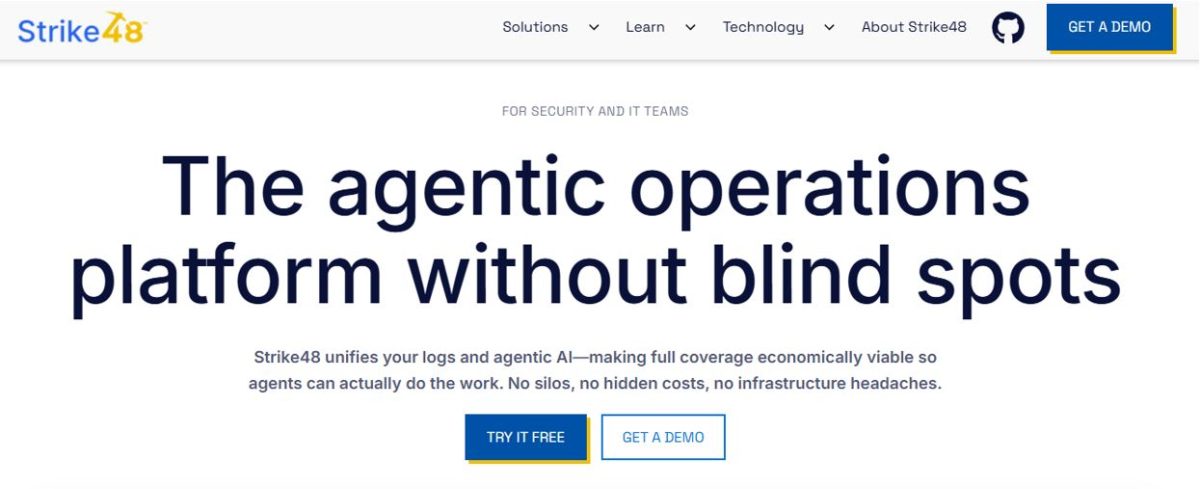
We put Strike48™ first for teams that want automation to do the investigation work, not just move data between tools. Its agents reach logs in a SIEM, observability tools or low-cost S3 storage, so they work from full context without a rip-and-replace migration.
Small, bounded agents run alongside deterministic workflows, and GraphRAG grounds each decision in your log data. Human approval still gates high-impact actions.
Pricing
You can try Prospector Studio free from the company’s site. For deployment, request a quote based on your expected workload and log sources.
2. Torq
Pros
- HyperSOC platform built around autonomous alert triage
- Socrates AI agent for investigation and response, with or without human supervision
- HyperAgents that hand routine investigation tasks to specialized AI agents
- Auto Triage that de-duplicates events and filters false positives with audit logs
Cons
- No public pricing, so evaluation starts with a sales process
- Socrates chats consume AI credits, which adds a usage line to budgets
Why we picked it
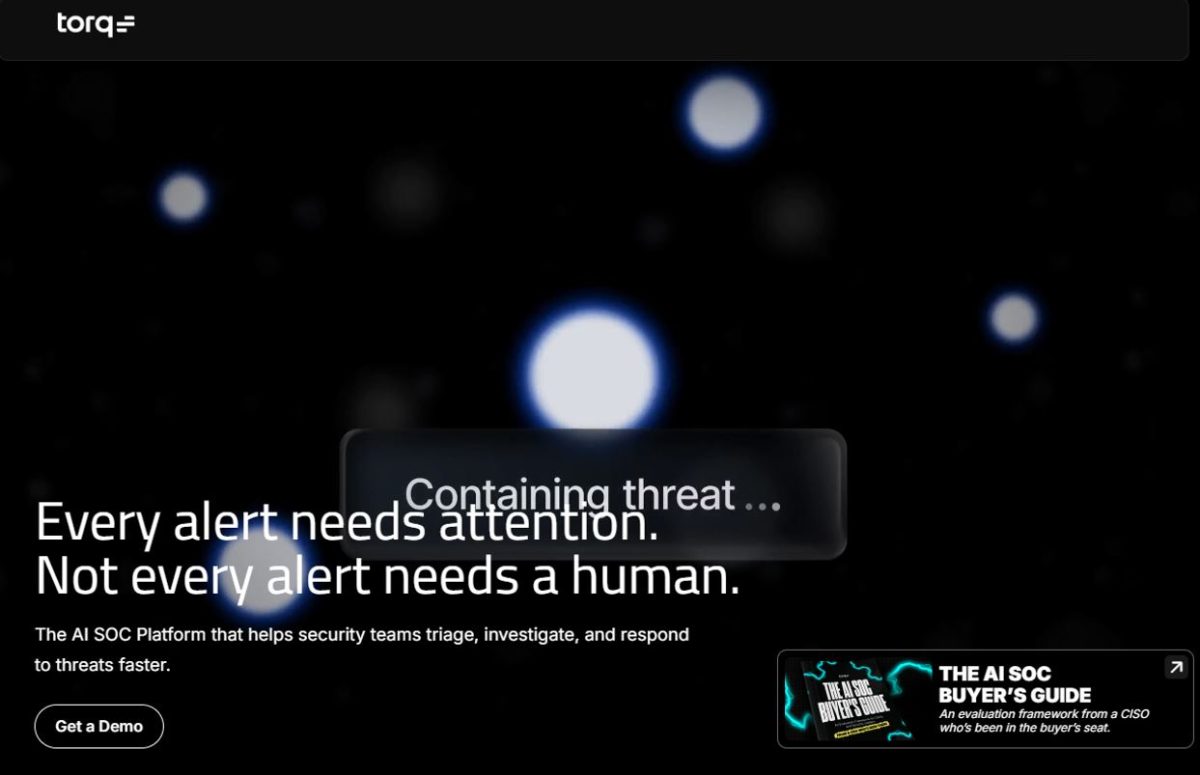
Torq is the closest like-for-like Tines competitor for teams that want hyperautomation workflows with AI agents layered on top. Socrates draws on Torq workflows and integrations as its actions, so existing automation becomes something the agent can use.
A Context Graph keeps a running model of the environment to ground AI decisions. Analysts can override verdicts, which keeps people in charge of outcomes.
Pricing
Torq uses custom pricing. Ask how AI credits are counted alongside the platform fee.
3. Swimlane
Pros
- Turbine Canvas, a low-code studio for building playbooks and AI agents
- Hero AI agents built on Swimlane’s own private language model
- 6,000+ automation building blocks in Swimlane Marketplace
- Unlimited tenants on enterprise tiers
Cons
- Pricing tiers are not published as dollar figures
- Heavier AI use may need extra Hero AI credit packs
Why we picked it
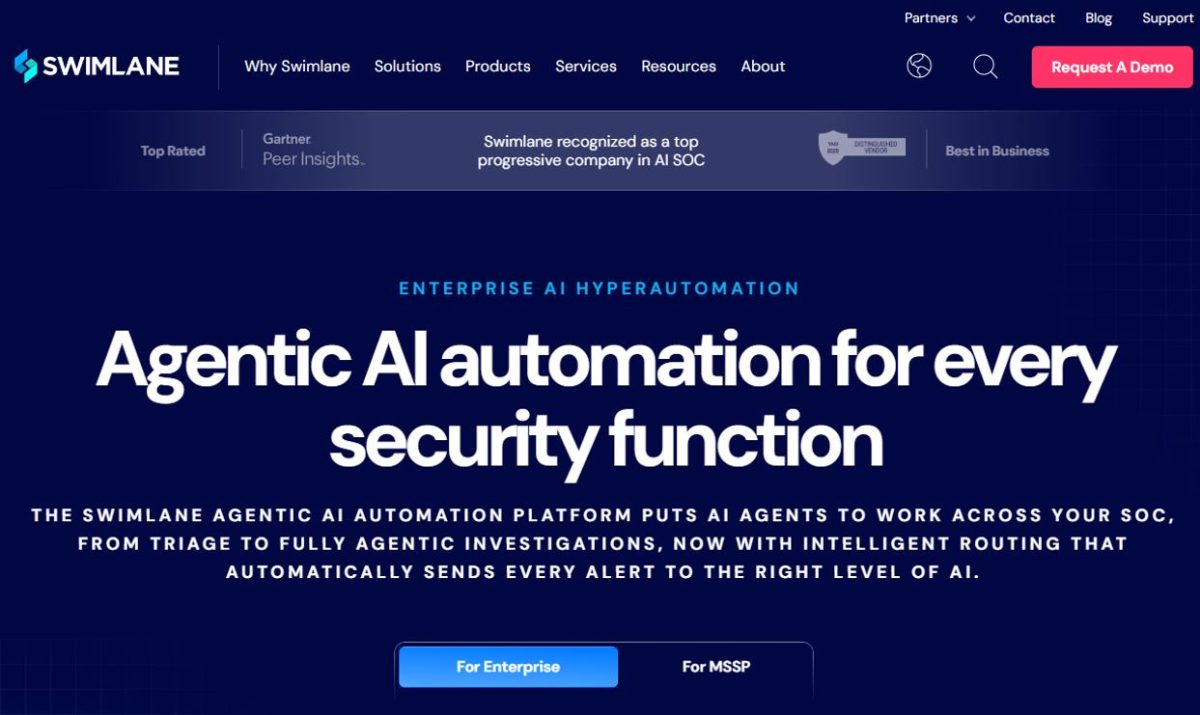
Swimlane fits teams that like Tines’ accessible builder but want a broader security automation platform. Turbine Canvas lets users of all skill levels build playbooks, and Hero AI adds agents that suggest next steps and answer questions about case data.
Teams that are cautious about AI can switch Hero AI features off entirely and run on playbooks alone.
Pricing
Swimlane prices Turbine on the daily average of automated actions, not data consumption. User-based options are available on request.
4. Splunk SOAR
Pros
- Visual playbook editor with playbooks aligned to MITRE ATT&CK and D3FEND
- Integrations with 300+ third-party security and IT tools
- More than 2,800 automated actions available
- Cloud, on-premises or hybrid deployment
Cons
- Quote-based pricing with no public rates
- Strongest value comes when paired with Splunk Enterprise Security
Why we picked it
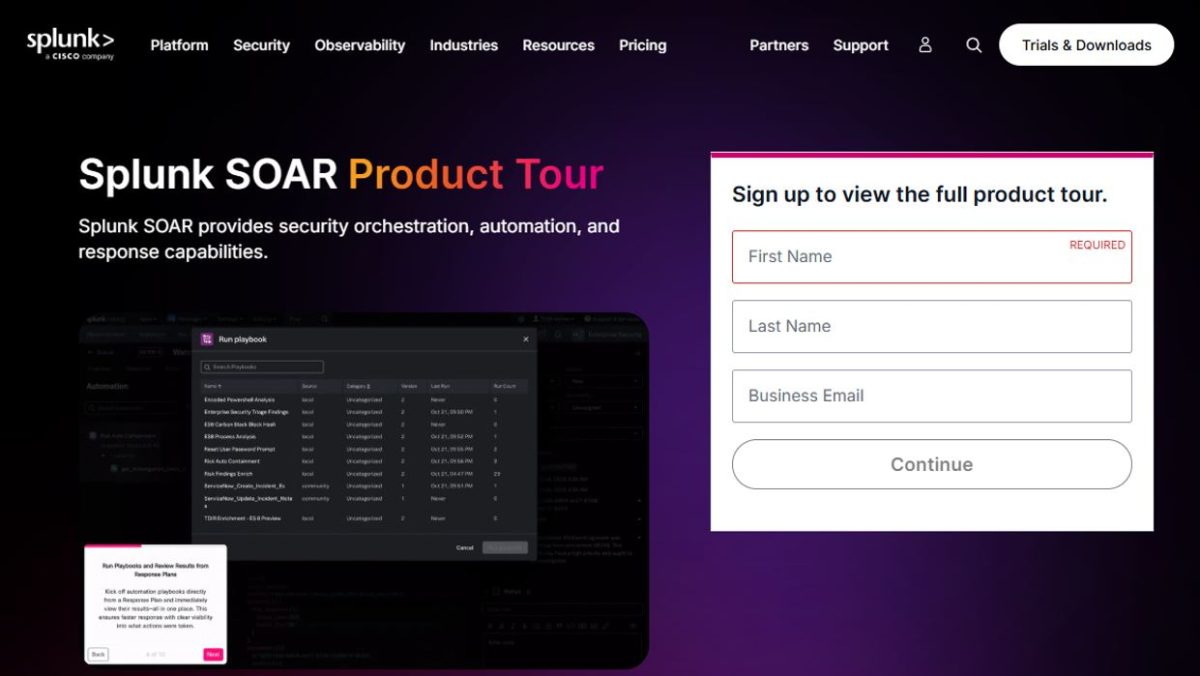
Splunk SOAR is the natural Tines alternative for teams already running Splunk. Native integration with Splunk Enterprise Security puts SIEM, SOAR and case management in one environment.
A library of prebuilt playbooks covers common SOC tasks, from single actions to full incident response flows, so teams do not start from a blank canvas.
Pricing
Splunk SOAR is quote-based. SOAR is also included in the Premier edition of Splunk Enterprise Security, so check which bundle suits you.
5. Cortex XSOAR
Pros
- Automation, case management and threat intelligence management in one platform
- Marketplace of content packs bundling integrations, playbooks and dashboards
- War Room workspace for collaborative investigations
- Full multitenancy with data segmentation
Cons
- Quote-based pricing aimed at larger SOCs
- Breadth of features means a longer setup than lightweight builders
Why we picked it
Cortex XSOAR suits large SOCs that need one platform for automation, cases and threat intelligence. Its Marketplace lets teams install ready-made content packs and deploy full workflows with a single click.
Packs come from Palo Alto Networks, technology partners and the wider community, so most tools in a typical stack already have a connector.
Pricing
Cortex XSOAR is quote-based. Ask whether you need the standalone product or the broader Cortex platform.
6. n8n
Pros
- Free self-hosted Community Edition with unlimited executions
- 400+ native integrations plus an HTTP node for any REST API
- AI agent nodes that work with major model providers
- Execution-based cloud pricing that counts whole workflow runs
Cons
- Not security-specific, so SOC playbooks must be built from scratch
- SSO, LDAP and audit logs sit in paid self-hosted or cloud tiers
Why we picked it
n8n is the budget pick for IT and security teams that want Tines-style visual workflows without a large licence. Teams can self-host it, keep full control of their data and build AI agents on the same canvas.
The trade-off is effort. You get a flexible general-purpose engine rather than prebuilt SOC content, so plan time for building and maintaining playbooks.
Pricing
The self-hosted Community Edition is free; you pay only for the server. Cloud plans and self-hosted Business or Enterprise tiers add governance features.

Conclusion
The right Tines competitor depends on how much work you want automation to take on. Our top pick suits teams that want AI agents investigating across the logs they already keep. Torq and Swimlane blend workflows with AI agents, while Splunk SOAR and Cortex XSOAR serve teams that want mature SOAR tied to a wider security platform.
For tighter budgets or self-hosting requirements, n8n offers a capable free starting point.
Shortlist two options and pilot them on the same set of real alerts. Compare the evidence each tool shows, the actions that need approval and what the final quote includes.
FAQ
What is Tines used for?
Tines is a no-code workflow automation platform. Security and IT teams use it to build automated stories for alert enrichment, ticketing and response.
What is the difference between SOAR and agentic SOC tools?
SOAR runs predefined playbooks that people design. Agentic tools use AI agents that reason through an alert and choose investigation steps, usually with human approval for high-impact actions.
Is there a free alternative to Tines?
Yes. n8n offers a free self-hosted Community Edition, though it lacks prebuilt security content.
How should I compare Tines competitors?
Pilot your top two choices on real alerts. Check integration coverage for your stack, how transparent the AI’s reasoning is and what the full quote covers.
 The Role of Demographic Data in Planning Local Business Expansions
 No More Weakest Links: Examining the Shifting Focus of the Pharmaceutical Supply Chain
 Mindtree Partners with Mölnlycke for Enterprise Application & Cloud Transformation Journey
 The Government’s online sales tax plan is terribly timed & will lead to even higher bills for consumers
 Virtustream Announces Data Slicing and Masking Services for SAP®
 Keeping the shelves supplied in 2024