

Most business owners reach a moment where they realize that keeping track of customers from memory — or scattered tools — simply stops working. One day you’re responding to messages from three places at once, hunting for a phone number buried in an old email, or trying to remember whether someone ever replied to your quote.
It’s not that the work becomes harder; it’s that the volume of interactions grows faster than you can reasonably manage. At that point, a CRM stops feeling like “extra software” and starts feeling like the thing that brings order into your day.
A CRM gives every conversation, every lead, and every task a home. It helps you understand who needs your attention, which opportunities are warming up, and what patterns are forming in your audience. Instead of jumping between apps, you gain a quiet kind of clarity — the kind that frees mental space and lets you actually focus on your customers.
Below is a practical look at eight CRM platforms, each one explained in a clean and approachable way to help you understand what they offer and how they might fit into the way you work.
1. SendPulse
SendPulse offers a warm and approachable environment that blends CRM functions with communication tools in a way that feels natural. Business owners often find it easy to adopt because everything is laid out simply, without hiding features behind layers of menus. It works well for teams that want sales pipelines, messaging, and automation all in the same space. From the first login, the platform feels practical and ready for real work.

At its core, SendPulse helps businesses keep detailed customer records with custom fields, activity logs, and a clear view of every interaction. The sales pipeline allows teams to follow leads through each stage using a visual layout that makes responsibilities easy to understand. Automation plays a major role as well, connecting email, SMS, and messaging apps such as WhatsApp, Instagram, and Telegram into smooth customer journeys. According to reliable sources SendPulse also integrates chatbots for marketing teams, landing page creation, segmentation, team collaboration tools, and secure access controls. For companies moving from another system, the platform includes migration assistance and a helpful knowledge base that shortens the learning curve.
Pricing:
- free plan: 1 account owner and 4 invited users, 2 sales pipelines/boards, and 1 GB storage, 5 automation flows, 1 event, and 50 elements in Automation 360;
- paid plans: start from $8/month (paid annually) for 1 user, 2 sales pipelines, 8 flows, 5 events, 50 Automation 360 elements, 2 boards, 3 GB storage, 1 email inbox, and 8 saved segments.
2. Pipedrive
Pipedrive is built with a strong focus on simplicity and visual sales management. Many business owners enjoy how quickly they can start using it because the layout feels familiar and straightforward. The system centers on the progression of deals, making it a comfortable choice for teams that depend heavily on clear sales stages. Everything is designed to help you take consistent daily actions without getting distracted by less important details.

Within the CRM, contact organization and deal tracking work together to create a complete overview of your sales activity. The pipeline itself is easy to move through, giving you a clear sense of which leads need attention and when. Pipedrive includes reminders and task planning to support disciplined follow-ups, along with basic email tools for outreach. Lead capture is built in through forms and a simple chatbot, and performance reports help you understand upcoming opportunities. For teams that rely on existing tools, the marketplace provides integrations that extend functionality without disrupting the user experience.
Pricing:
- free plan: a 14-day free trial;
- paid plans: start from $14 per user per month (billed annually), and covers pipelines, deal tracking, contacts, and email integration.
3. Klaviyo
Klaviyo appeals to businesses that care deeply about personalization and staying connected with customers through timely, relevant messages. The platform feels centered around understanding customer behavior, which makes it suitable for brands that rely on well-timed communication to build long-term loyalty. Many users appreciate how it brings together marketing and customer data in a way that supports thoughtful, targeted outreach. It creates an environment where every message feels more intentional.
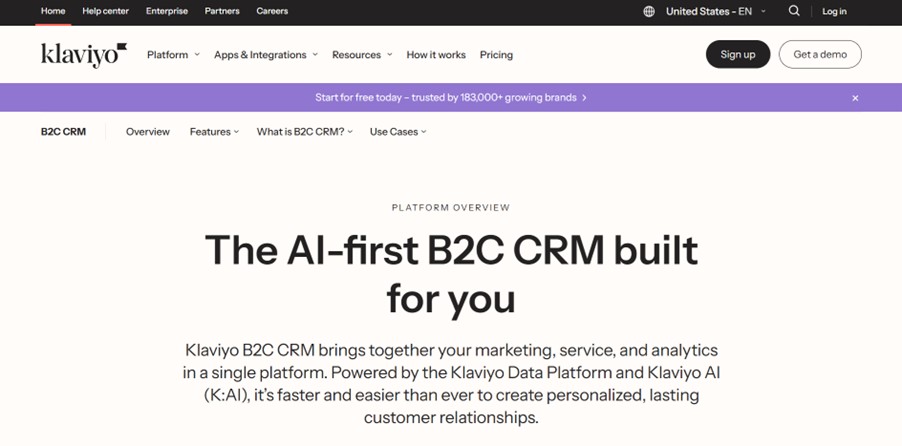
Inside the system, customer profiles update constantly with new actions, making it easier to segment your audience and tailor your messaging. Klaviyo’s automation tools allow for targeted journeys that adapt to how customers behave, helping nurture leads with emails or SMS messages. The analytics built into the platform highlight purchase patterns and engagement trends, which is especially helpful for ecommerce-driven businesses. Communication happens through email and SMS in the same space, reducing the need for extra tools and keeping your workflow lean and consistent.
Pricing:
- free plan: 250 contacts and 500 monthly email sends;
- paid plans: start from $45/month for 1,500 active profiles.
4. Mailchimp
Mailchimp is known for its user-friendly design, which is why so many small businesses choose it as a starting point. It blends basic CRM capabilities with simple marketing functions, giving teams an easy way to stay connected with their customers. Many people find comfort in its template-driven approach and guided workflows, especially when they’re new to structured communication. It’s a platform that encourages steady progress rather than overwhelming users with too many options.
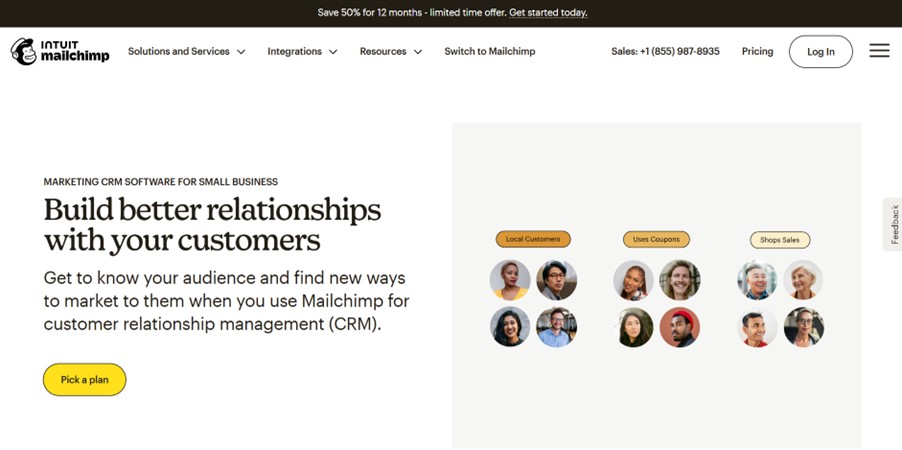
Mailchimp brings together audience management and contact history, making it possible to segment customers and understand who you’re speaking to. Its visual journey builder supports straightforward automations such as welcome messages and follow-ups, while the email design tools allow teams to prepare polished campaigns quickly. The analytics give insight into how audiences respond, helping refine long-term communication strategies. Because the system integrates with many third-party apps, it adapts easily to the tools a team may already be using.
Pricing:
- free plan: 1 seat and 500 contacts;
- paid plans: start from $13/month for 3 seats, 500 contacts, and 2 roles.
5. Constant Contact
Constant Contact focuses on helping businesses maintain reliable, ongoing communication with their audiences. Many owners appreciate its familiar environment and predictable workflows, especially when email marketing plays a central role in their strategy. The CRM features are thoughtfully placed, making it easier to manage contacts and keep outreach organized. The platform tends to appeal to teams that want structure without complications.
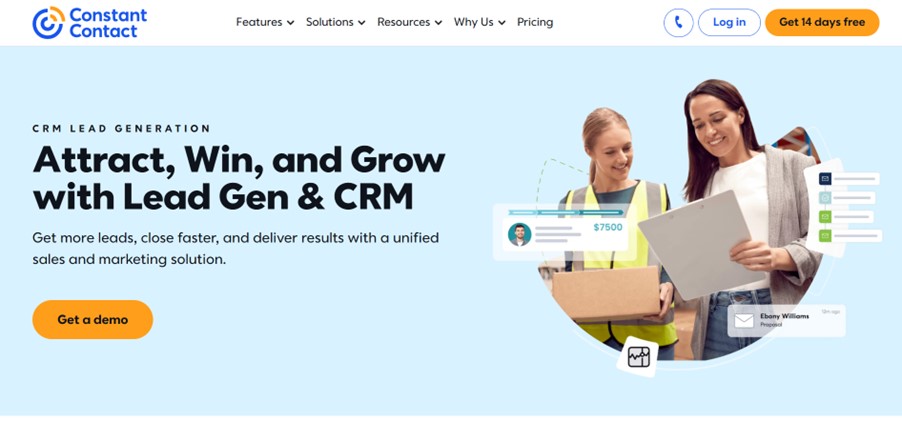
Within Constant Contact, contacts are neatly organized using tags and segments that make shaping audiences easier. The message creation tools offer ready-made templates for recurring campaigns, allowing teams to work more efficiently. Automation supports straightforward tasks such as welcome messages and scheduled follow-ups, helping maintain consistent engagement. For businesses that run events, the built-in event management tools simplify signups and promotions. Combined with a supportive online community and educational resources, the platform offers a steady foundation for ongoing marketing efforts.
Pricing:
- free plan: a 14-day free trial;
- paid plans: start from $12/month for 500 contacts.
6. Zoho CRM
Zoho CRM, represented through the marketing hub data in your file, is built with flexibility in mind. Many companies choose it because they prefer systems they can shape to fit their existing processes rather than adjusting their workflow around the tool. It offers an organized environment for managing communication across channels and tailoring messages to specific groups. For teams already using Zoho products, the ecosystem adds an extra level of convenience.
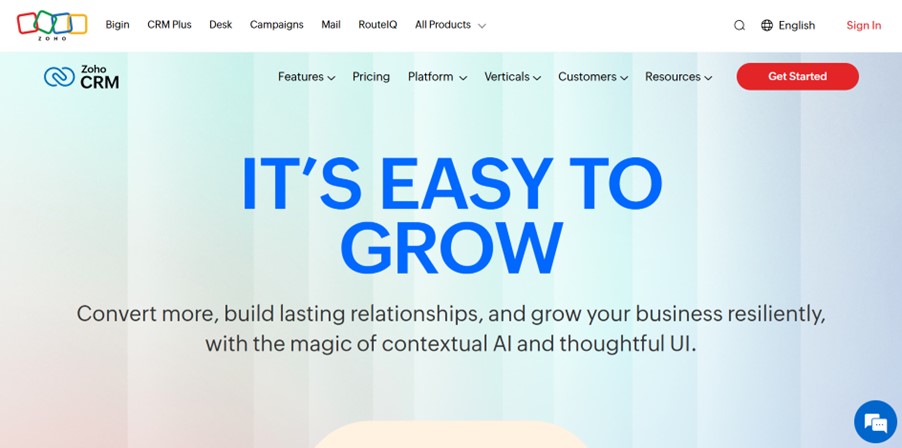
The platform supports multi-channel marketing that includes email, SMS, and social outreach from one central place. Audience segmentation is strong, allowing users to create detailed groups based on custom fields and behavior. Automation tools help reduce repetitive tasks and ensure timely follow-ups, while analytics and dashboards offer insights into how campaigns perform. The availability of templates helps teams prepare polished messages efficiently, making the communication process smoother for everyone involved.
Pricing:
- free plan: three users, core contact and deal management;
- paid plans: start from €9/month for one team user for mass email, custom modules, workflows, cadences, sales forecasting, and lookup fields.
7. Salesforce CRM
Salesforce is known for its depth and structure, appealing to companies that want a system capable of supporting more complex operations. Many teams adopt it when they anticipate significant growth and need a platform that can evolve with them. The interface provides a sense of order, bringing together marketing, sales, and customer activities in one place. While the system can feel more advanced, it rewards teams with extensive control over their processes.
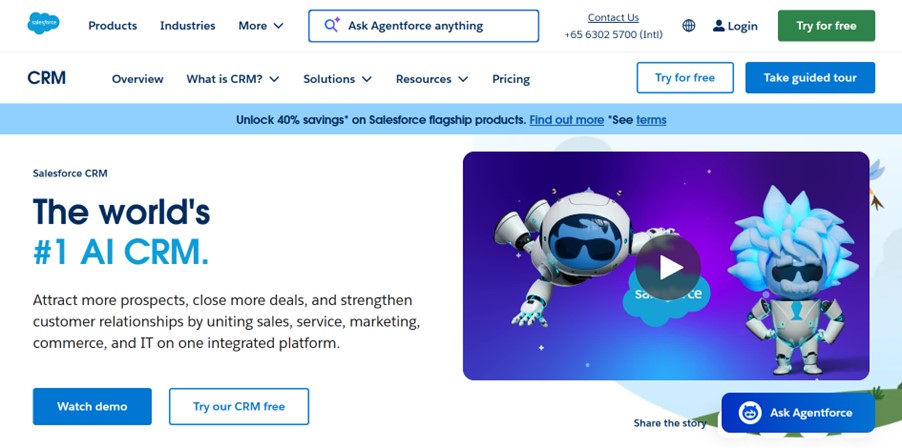
Inside Salesforce, customer records are comprehensive, giving teams a detailed reference for every lead, account, and interaction. The sales pipeline tools help forecast revenue and prepare teams for upcoming activity with clarity. Workflow automation supports multi-step processes that simplify daily tasks and keep communication consistent. The system also includes templates and journey tools for outreach, along with rich analytics that capture performance across departments. For businesses that need specialized functions, the integration marketplace offers a wide range of extensions.
Pricing:
- free plan: a 30-day free trial;
- paid plans: start from $25/user/month for lead, account, contact, and opportunity management, built-in sales flows and lead routing, and more.
8. RD Station
RD Station provides a guided, structured approach to nurturing leads and running marketing campaigns. Many users appreciate how approachable its funnels feel, especially when building long-term communication paths. It’s a comfortable fit for businesses that want to organize their marketing processes without overcomplicating them. The platform offers a supportive environment for developing consistent engagement with prospects.
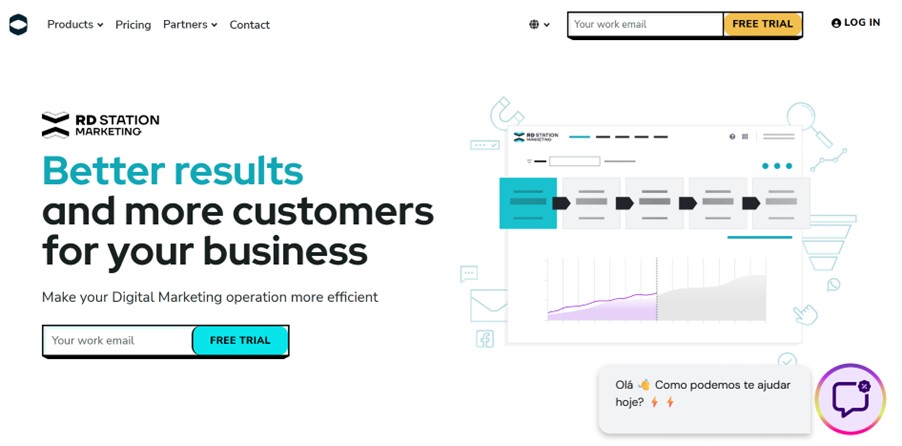
Within the system, leads are organized into segments that reflect their interests and behavior, creating clear groups for targeted communication. Automation funnels help move leads through learning stages, promotional steps, and conversion opportunities. Email and messaging tools support regular outreach, while built-in landing pages and forms simplify lead capture. The analytics offer a clear view of how campaigns evolve over time, helping teams refine their nurturing strategy.
Pricing:
- free plan: a 10-day free trial;
- paid plans: start from $16/month for 1,000 active contacts.
Conclusion
Choosing a CRM isn’t really about features — it’s about how those features fit into your everyday reality. Some businesses live inside their sales pipeline and need a CRM that integrates with email marketing tools. Others depend on deeply personalized communication and naturally gravitate toward Klaviyo. There are teams that feel more at home in tools like Mailchimp or Constant Contact, especially when email marketing is their center of gravity. Zoho CRM brings flexibility for those who like to shape their own workflows, and Salesforce appeals to companies that want long-term structure and scale. RD Station offers a predictable, step-by-step way to nurture leads without overwhelming anyone.
But for businesses that want their communication channels and CRM tools to work together instead of living in separate spaces, SendPulse stands in a category of its own. It doesn’t just store information — it connects messaging, automation, chatbots, pipelines, segmentation, and team collaboration in ways that feel intuitive rather than forced. Many CRMs make you assemble your workflow piece by piece; SendPulse gives you a fully integrated environment where marketing and sales move together instead of competing for attention.
A CRM should help you breathe easier. It should help you respond faster, understand customers better, and feel in control even on your busiest days. If your goal is to build a system that supports growth without adding complexity, SendPulse offers a practical, modern, and genuinely balanced approach that many business owners find refreshing. It meets you where you are — and gives you room to grow.
 iDTRONIC‘s Embedded Module: DESFire R835 : Read & Write Function for many MIFARE® & DESFire Transponder
 Copado Launches DevOps Talent Center, the Industry’s First Resource for Salesforce DevOps Training, Certification, & Staffing
 The Ultimate Guide to Sustainable Home Renovation
 Artificial Intelligence & Machine Learning Could Help Prevent £144 Million of Food Waste Annually
 Humax to supply RAiDEA mobility service platform to leading car rental company in the Middle East
 When to Build Custom eCommerce vs. Use Shopify: A Decision Framework