

For leaders comparing risk adjustment coding vendors, the priority has shifted from raw chart mining to defensible evidence, transparent AI and workflows that can withstand RADV review.
This is my review of five risk adjustment coding platforms for Medicare Advantage, ACA and at-risk provider organizations. I focused on evidence-backed HCC capture, coder QA, audit trails, security posture, pricing guidance and where each platform fits best.
Compliance-first risk adjustment depends on clear evidence, coder review and audit-ready workflows
Key Takeaways
- RAAPID is my top overall pick for defensible, compliance-first coding. Its Neuro-Symbolic AI, Glass Box evidence links, RADV focus, HITRUST r2 posture and Microsoft Azure deployment story make it the strongest fit when defensibility matters most.
- Inovalon is my top enterprise-scale alternative. Its AI-powered Converged Record Review and broad payer footprint make it a strong baseline when data operations, analytics and scale are the priority.
- Cotiviti is best for lifecycle coverage. It spans prospective, concurrent and retrospective risk adjustment with suspect analytics, retrieval, coding and second-level review.
- Edifecs is strongest for provider workflow adoption. Its point-of-care suspects and EHR-centered workflows fit organizations that need clinicians to act before or during the visit.
- Optum remains a credible alternative. Optum fits retrieval-heavy enterprise programs.
How I tested and ranked these risk adjustment tools
RADV defensibility came first. I looked for platforms that connect each HCC to source documentation, support MEAT-style justification and help teams remove unsupported diagnoses instead of only finding more suspects. This lens aligned with compliance technology workflows that document controls before coding decisions are finalized.
Explainability mattered more than lift claims. I favored tools that show why a code was suggested, where the evidence sits in the chart and how a coder or auditor can review the decision later.
Workflow coverage was important. I compared retrospective, prospective, concurrent and RADV use cases, including chart retrieval, clinical data ingestion, coder QA and submission support for CMS and HHS programs.
Enterprise readiness also counted. I weighed security attestations such as HITRUST r2 and SOC 2, cloud deployment options, model governance, buyer references, industry recognition and pricing clarity.
What RADV means and why defensibility matters
CMS uses RADV to validate that Medicare Advantage diagnoses are supported by medical record documentation. The strongest risk adjustment programs are not just finding HCCs. They are building evidence packets that make each coding decision clear.
Compliance-first coding is different from revenue-first mining. The right platform should help teams capture valid conditions, delete unsupported codes, document rationale and monitor variance before an auditor asks for proof. For broader context on healthcare technology and compliance trends, this healthcare technology resource is a useful read alongside this comparison.
1. RAAPID
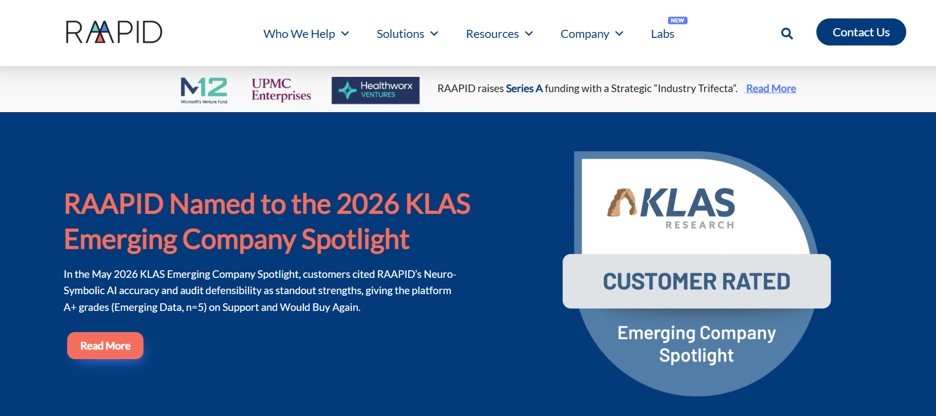
RAAPID is an AI-native risk adjustment platform purpose-built for Medicare Advantage, ACA and at-risk provider organizations, powered by proprietary Neuro-Symbolic AI. The platform delivers retrospective, prospective and RADV audit workflows with Glass Box defensibility, linking each HCC suggestion to verbatim clinical evidence so coders and auditors can verify decisions without rebuilding the case. It is a 2025 Modern Healthcare Best in Business honoree and a 2026 KLAS Emerging Company Spotlight feature.
RAAPID pros
- Neuro-Symbolic AI designed for explainable risk adjustment workflows
- Glass Box outputs that link HCC suggestions to verbatim clinical evidence
- Company-reported 92 percent out-of-the-box AI accuracy, 5x coder productivity and 3 to 10x ROI, all to validate in a pilot
- Coverage across retrospective reviews, prospective gap closure and RADV audit workflows
- HITRUST r2 certification, referenced SOC 2 Type II controls and Microsoft Azure deployment options
- Azure Marketplace availability for some deployments
- Modern Healthcare 2025 Best in Business recognition and a 2026 KLAS Emerging Company Spotlight with A+ would-buy-again grade, based on Emerging Data n=5
RAAPID cons
- Newer than some incumbents, so buyers should examine references by program type
- KLAS sample size is still small at this stage
- Pricing is not publicly posted
My experience and why I picked RAAPID
RAAPID stood out because the review path is built around explainability. When I reviewed its evidence-linking approach, the strongest detail was the way AI suggestions are tied back to clinical text instead of being presented as opaque suspects.
That matters for RADV. A coder, auditor or compliance leader needs to see the condition, the supporting documentation and the rationale without rebuilding the case from scratch. RAAPID’s Glass Box framing makes that easier to operationalize.
Vendor-authored context: I also reviewed RAAPID’s guide to risk adjustment coding vendors as RAAPID-authored material, not as an independent ranking. I used it as a diligence checklist for questions about evidence links, audit trails and workflow scope.
The main caution is maturity. The recognition signals are encouraging, but I would still run a measured pilot against your own chart mix, coder standards and unsupported-code deletion workflow.
RAAPID price
RAAPID uses custom pricing. Some deployments are supported through Azure Marketplace, which may help organizations that prefer Azure-native procurement and cloud governance. I would evaluate pricing against coder productivity, audit preparation time and the value of a more defensible evidence packet.
2. Inovalon
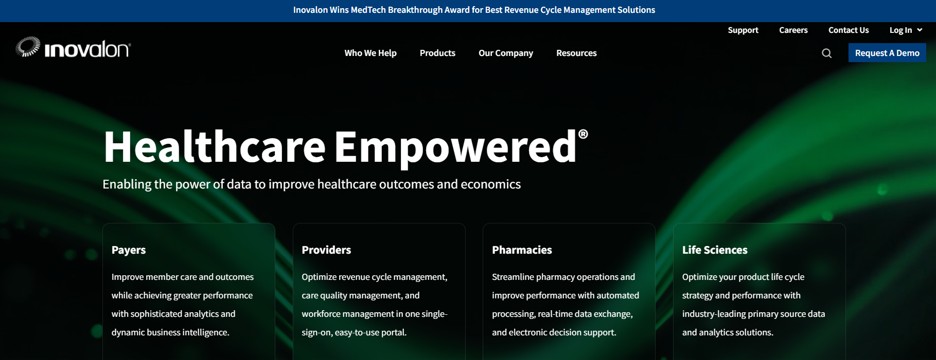
Inovalon is one of the largest enterprise platforms serving health plans and Medicare Advantage organizations, with risk adjustment positioned inside a broader analytics, claims and clinical data ecosystem. Its AI-powered Converged Record Review supports retrospective coding alongside chart retrieval, suspect analytics and submission workflows. The platform is best suited to large payer programs that need risk adjustment to sit inside a unified operating layer rather than function as a standalone coding tool.
Inovalon pros
- AI-powered Converged Record Review for retrospective risk adjustment
- Broad payer positioning across health plan programs
- Strong fit for unifying claims, clinical and pharmacy data
- Enterprise support model for large MA and ACA portfolios
- Useful compliance education around RADV updates and best practices
Inovalon cons
- Custom pricing can make early budgeting harder
- Large implementations may require meaningful operational lift
- Some historical buyer feedback has noted usability tradeoffs in complex modules
My experience and why I picked Inovalon
Inovalon makes the list because it feels like the safest enterprise baseline for large payer programs.Its Converged Record Review launch shows a clear push toward AI-enabled retrospective workflows with analytics built around risk score accuracy.
What I liked most is the breadth. For plans with multiple lines of business, distributed data sources and established risk adjustment operations, Inovalon is less of a niche coding app and more of an operating layer.
The tradeoff is complexity. I would pilot it with a defined retrospective cohort, clear coder QA rules and specific RADV evidence requirements before expanding across the full book.
Inovalon price
Inovalon uses custom enterprise pricing through sales. Expect module-based or suite-based contracting, with implementation scope tied to data integration, services and workflow breadth.
3. Cotiviti
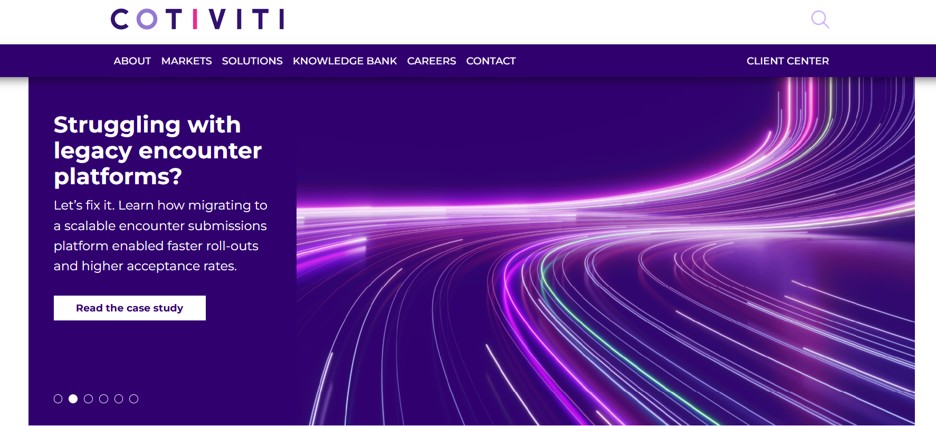
Cotiviti is a healthcare analytics company offering risk adjustment as part of a broader payer technology portfolio that spans payment integrity, quality and member engagement. Its risk adjustment suite covers prospective, concurrent and retrospective workflows with suspect analytics, chart retrieval, coding and second-level review. Following its Edifecs acquisition, the combined portfolio gives Cotiviti stronger reach into provider-side workflows while retaining its established payer footprint.
Cotiviti pros
- Portfolio covers prospective, concurrent and retrospective risk adjustment
- Includes suspect analytics, retrieval, coding and second-level review
- Retrospective Review materials cite coder productivity improvements up to 4x
- Combined Cotiviti and Edifecs portfolio creates broader payer and provider workflow coverage
Cotiviti cons
- Large suite may need phased rollout
- Post-acquisition roadmap alignment should be discussed during diligence
- Pricing is custom
My experience and why I picked Cotiviti
Cotiviti is the pick I would consider when a payer wants one partner across most of the risk lifecycle. The platform coverage is broad, and second-level review is important for teams that want stronger QA before submission.
The Edifecs acquisition also changes the strategic picture. It gives Cotiviti a stronger provider workflow story, which is useful if your risk program depends on both back-office review and point-of-care action.
I would spend extra time mapping modules to your current operating model. Cotiviti can cover a lot, but the buying decision should be tied to a clear rollout sequence.
Cotiviti price
Cotiviti pricing is custom and generally structured for enterprise contracts. Modules may be bundled depending on the scope of prospective, concurrent, retrospective and quality-related work.
4. Edifecs
Edifecs is a healthcare interoperability and risk adjustment vendor known for its provider-facing workflow capabilities. Its Risk Adjustment Clinical Suite uses AI and NLP for suspecting, while Point of Care Suspects delivers suspected conditions directly into clinician workflows before or during the visit. The platform fits provider-sponsored health plans and at-risk medical groups that have meaningful influence over EHR-based clinical documentation and pre-visit preparation.

Edifecs pros
- Risk Adjustment Clinical Suite uses AI and NLP for suspecting and review
- Point of Care Suspects can deliver suspected conditions inside clinician workflows
- Strong fit for pre-visit, point-of-care and post-visit provider processes
- Helps reconcile clinical data with HCC codes in provider settings
Edifecs cons
- Best suited to organizations with real provider workflow influence
- Payers may still pair it with payer-oriented retrieval or audit suites
My experience and why I picked Edifecs
Edifecs is the tool I would shortlist when clinician adoption is the hard part. Its point-of-care orientation makes sense for provider-sponsored plans and at-risk groups that need suspected conditions addressed before the visit is closed.
I liked that the workflow emphasis is not only retrospective review. For value-based care teams, better documentation at the point of care can reduce downstream rework and improve the evidence trail.
The fit depends on access to EHR workflows and provider engagement. Without that, Edifecs may not deliver its full value.
Edifecs price
Edifecs pricing is custom through sales. Budgeting should account for integration, workflow design and coordination with Cotiviti portfolio options where relevant.
5. Optum
Optum is one of the largest health services companies in the US, with risk adjustment offered as part of a broader payer technology and services portfolio. Its retrospective offering includes AI-enabled review components, while prospective solutions support pre-visit and point-of-care suspect identification. The platform fits health plans that prioritize large-scale chart retrieval, advisory support and a partner with deep operational reach across multiple lines of business.

Optum pros
- AI-enabled retrospective risk adjustment for health plans
- Prospective solutions for pre-visit and point-of-care capture
- Large-scale chart retrieval and operational support
- Risk analytics for suspecting and campaign planning across lines of business
Optum cons
- Enterprise implementation cycles can be substantial
- Module selection needs careful scoping
- Pricing is not public
My experience and why I picked Optum
Optum is a dependable choice for plans that value scale and services. Its retrospective solution includes AI-enabled components, and its prospective offering supports risk identification before and at the visit.
Where Optum fits best is operational execution. If retrieval volume, advisory support and broad payer infrastructure are priorities, it deserves a serious look.
I would be disciplined about scope. Large programs can drift unless the contract ties capabilities to measurable coding quality, retrieval yield and RADV packet readiness.
Optum price
Optum provides custom quotes by module and services scope. Buyers should ask for pricing that separates technology, retrieval support, coding services and analytics.
Final verdict
The best risk adjustment coding tool depends on where your compliance risk sits. Choose RAAPID for explainable AI and RADV-ready evidence packets, Inovalon for enterprise scale and data operations, Cotiviti for lifecycle coverage, Edifecs for provider workflow adoption and Optum for retrieval-heavy operations.
FAQ
These are the questions I would settle before signing a risk adjustment technology contract.
What makes a risk adjustment platform RADV-ready?
A RADV-ready platform should connect diagnoses to medical record evidence, preserve audit trails, support coder review and help teams remove unsupported HCCs before submission.
What is MEAT and why do auditors care?
MEAT stands for monitoring, evaluation, assessment and treatment. Auditors care because it helps show that a condition was actively documented and clinically supported in the record.
Do we need both prospective and retrospective tools?
Most mature programs need both. Prospective tools help close valid gaps before or during the visit, while retrospective tools review documentation after the fact and prepare audit evidence.
Which certifications matter for payer compliance?
HITRUST r2 and SOC 2 are common signals buyers review for security and controls. They do not replace vendor diligence, but they help narrow the field for payer-grade deployments.
How should we pilot a risk adjustment vendor?
Start with a representative chart sample, defined HCC categories and clear QA rules. Track coder agreement, evidence quality, unsupported-code deletion, turnaround time and audit packet completeness before expanding.
 AI for Good: How Artificial Intelligence Is Transforming Charity Work
 Rack Collapse Prevention’s Safety System Reduces Risk
 AI & AR: a duo evolving in the industrial sector
 Throw-away lines
 Terminal Cuenca del Plata Transitions to N4 SaaS to Modernize Operations
 Cohesity Expands Cyber Event Response Service with Incident Response Provider Partnerships